
Uncategorized
Some of the hardest moments happen between appointments: a morning routine that falls apart, a child who cannot communicate what they need, a difficult call from school, or the worry that you are missing the right way to help. ABA therapy can offer more than a plan for managing behavior. When it is individualized and delivered with care, it gives children meaningful ways to communicate, participate, learn, and feel more successful in their everyday lives.
Your child is more than a diagnosis, and support should reflect that. The purpose of ABA is not to change who your child is. It is to understand what makes daily life difficult and build practical skills that help them thrive at home, in school, and in their community.
What Is ABA Therapy?
ABA stands for Applied Behavior Analysis. It is an evidence-based approach that looks at how a child interacts with their environment, what happens before and after a behavior, and which supports can make a skill easier to learn and use.
In plain language, ABA therapy helps a child practice skills in small, achievable steps. A provider may teach a child how to ask for a break instead of becoming overwhelmed, follow a simple routine, take turns during play, respond to a teacher’s direction, or use words, pictures, signs, or a communication device to express a need.
The approach is not one-size-fits-all. A goal that matters deeply for one family may not be a priority for another. For one child, the focus may be communicating when they are hungry, frustrated, or tired. For another, it may be joining peers during recess, completing homework with less distress, or becoming more independent with dressing and hygiene.
Progress is built through repetition, encouragement, and adjustments based on what a child is showing the care team. The strongest ABA plans make room for a child’s interests, preferences, sensory needs, culture, family routines, and communication style.
ABA Therapy Begins With Understanding Your Child
Before treatment begins, a Board Certified Behavior Analyst, or BCBA, completes an assessment. This is not simply a checklist of challenges. It is an opportunity to learn about your child as a whole person: what they enjoy, what they do well, where they get stuck, and what would make the biggest difference for your family.
Caregivers are essential to this process. You know what a hard transition looks like, which activities bring joy, what has been tried before, and what success would feel like in your household. Your insight helps shape goals that are useful outside a therapy session.
A quality assessment may include conversations with caregivers, direct observation, review of relevant records, and coordination with other members of a child’s care or school team when appropriate. From there, the BCBA creates an individualized treatment plan with clear goals and a way to measure progress over time.
Measurable goals do not mean reducing a child to numbers. They help families and clinicians see whether support is working. If a strategy is not helping, the plan should change. If a child has mastered a skill, the next goal should build on that growth.
Skills That May Be Part of a Treatment Plan
ABA services can support many areas of daily functioning. Communication goals may focus on requesting help, answering questions, or expressing emotions. Social goals may include sharing attention, taking turns, participating in group activities, or recognizing when a peer wants space.
Other plans may focus on emotional regulation, flexibility with changes, toileting, sleep routines, mealtime participation, safety skills, school readiness, or independent living skills appropriate for the child’s age and development. Behavior support can also help families understand challenging moments, including what may be causing them and which proactive strategies can reduce stress.
The goal is not perfect compliance or forcing a child through discomfort. Effective care considers whether a child is tired, hungry, in pain, overstimulated, confused, or unable to communicate a need. It teaches safer, more effective alternatives while respecting the child’s dignity.
What Sessions Can Look Like Day to Day
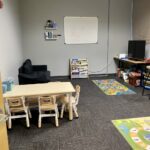
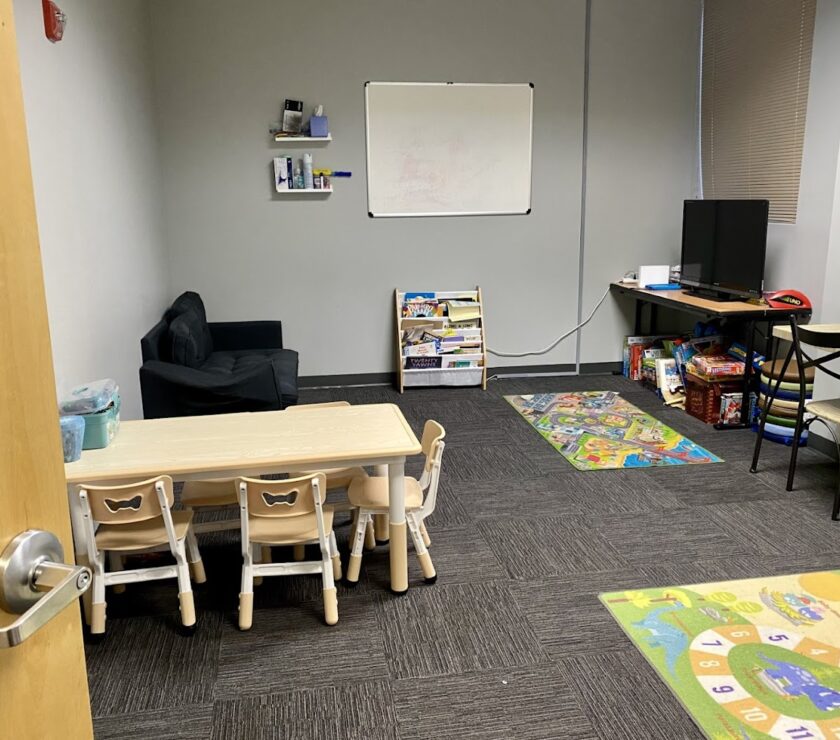
Many children receive one-on-one support from a Registered Behavior Technician, or RBT, under BCBA supervision. Sessions often use play, routines, movement, conversation, and real-life activities instead of expecting a child to sit at a table for long periods.
If a child loves trains, animals, drawing, or music, those interests can become part of learning. A therapist might use a favorite activity to practice requesting, waiting, sharing, following directions, or shifting from one activity to another. When skills are taught in ways that feel relevant and engaging, children have more opportunities to use them naturally.
Sessions may take place in the home, community, clinic, or school setting, depending on the child’s needs and service plan. Each setting offers different opportunities. Home-based care can support routines such as getting ready for school or eating dinner. Community-based work may focus on safety, social participation, or handling unexpected changes. School coordination can help create more consistency around classroom expectations and communication.
Treatment intensity also depends on the child. Some children benefit from focused support around a few specific goals, while others need more frequent services across several areas of development. The right recommendation should be based on clinical need, family capacity, and what is realistic to sustain.
Family Training Makes Progress More Usable
Parents and caregivers should not be expected to watch from the sidelines. Family training is a core part of meaningful ABA care because you are the person your child turns to every day.
A clinician can help you recognize patterns behind difficult moments and practice strategies that fit your household. That may mean learning how to prepare for a transition, offer choices without creating more conflict, respond consistently to a request for attention, or support a child through a frustrating task.
This is not about asking parents to become therapists. It is about giving you tools that feel practical and manageable. You may not be able to use every strategy every day, and that is okay. Good care accounts for real family life, including work schedules, siblings, appointments, fatigue, and the fact that some days are simply harder than others.
When caregivers, therapists, and school teams use similar approaches, children receive clearer and more predictable support. That consistency can reduce confusion and help a skill carry over from one setting to the next.
What to Look for in an ABA Provider
ABA can look very different depending on the provider, so asking thoughtful questions matters. Look for a team that listens closely to your goals, explains recommendations in language you can understand, and involves a BCBA in ongoing treatment oversight.
Children should be treated with respect throughout the process. Their communication, comfort, preferences, and signs of distress deserve attention. Ask how the provider incorporates choice, supports emotional regulation, responds when a child says no or needs a break, and ensures goals are meaningful for the child and family.
It is also reasonable to ask how progress is shared, how often goals are reviewed, and how the team coordinates with schools or other providers. Families should not have to chase answers about schedules, authorizations, or care plans while trying to support a child with significant needs.
For families in Washington, DC, Maryland, and Virginia, Improved Dynamics ABA Therapy can help with the practical steps that often feel overwhelming, including insurance verification, the intake process, individualized assessment, and coordinated treatment planning. Having guidance through those steps can make it easier to move from uncertainty to action.
Taking the First Step Can Be Simple
If you are considering ABA, begin by identifying the situations that are creating the most stress or limiting your child’s participation. You do not need clinical language. A simple description such as “mornings are overwhelming,” “my child cannot tell us when something hurts,” or “school transitions are getting harder” is a valuable starting point.
From there, a care team can help determine whether ABA services are appropriate and which goals may offer the most immediate benefit. Insurance coverage, availability, location, and scheduling can affect the process, but you do not have to solve every detail before reaching out.
Your child does not need to become someone else to build new skills. With compassionate, individualized support and practical tools for the whole family, tomorrow can hold more understanding, more confidence, and more chances for your child to say yes to the world around them..